Alert: We have received reports that fraudsters are spoofing Liberty First Credit Union's 855-501-4600 and 402-465-1000 phone numbers to make it appear they are calling from us. Never share your Online Banking credentials, verification codes, card numbers, PINs, or other sensitive information over an unsolicited phone call—if you're unsure whether a call is legitimate, hang up and contact us directly.

X

Blog

What Is a Share Savings Account and Why Do You Need One?

If you are looking for a financial partner in Nebraska that prioritizes your goals over corporate profits, you may have come across the term “Share Savings Account.” While it might sound like a complex investment term, it is actually the foundation of everything we do at Liberty First Credit Union.

Understanding what a share savings account is and how it differs from a standard bank account is the first step toward achieving true financial independence.

What Makes a Credit Union Different From a Bank?

The primary difference between a credit union and a traditional bank lies in ownership. Banks are for-profit institutions owned by outside stockholders who expect a return on their investment. At a bank, you are a customer.

In contrast, Liberty First Credit Union is a member-owned, not-for-profit financial cooperative. We don’t have outside shareholders. Instead, we exist solely to provide our members with affordable financial services. This “people helping people” philosophy means that our earnings are returned to you in the form of higher dividends, competitive loan rates, and low-cost services.

What Is a Share Savings Account?

When you open a savings account at a credit union, it is called a “Share” account because it literally represents your share of ownership. While a bank account is simply a place to store money, a Share Savings Account at Liberty First Credit Union signifies that you are a part-owner of the institution.

Because we are a democratic organization, your share gives you a voice. Regardless of whether you have $5 or $50,000 in your account, every member owns exactly one share and receives one vote in our Board of Directors elections.

How the $5 Share Works at Liberty First Credit Union

At Liberty First Credit Union, we believe in keeping the barrier to entry low so that everyone in our community can benefit from our services. To establish your membership, you simply need to open a share savings account with a minimum balance of $5.

This $5 deposit isn’t just a fee; it is your “par value” share. As long as you maintain that $5 balance, you remain a member-owner of the credit union and stay eligible for all the benefits we offer. Your savings also work for the community: member deposits create a pool of funds that allows us to provide low-interest loans to other members right here in Nebraska.

What Benefits Come With Membership?

Once you’ve opened your share savings account, you gain access to a full suite of financial products designed with your well-being in mind. Benefits include:

  • Competitive Dividends: Your savings earn returns that help your money grow faster.
  • Lower Fees: Because we aren’t focused on profit, we keep our service fees as low as possible.
  • Local Decision Making: We’ve been serving Nebraska since 1935. We understand the needs of residents in Lancaster and Seward County because we live here, too.
  • A Financial Partner for Life: Once a member, always a member. Even if you move or change jobs, you can keep your Liberty First Credit Union accounts.

How to Open Your Account Today

Becoming a member-owner is simple. If you live, work, worship, or attend school in Lancaster County or Seward County, Nebraska, or if you are related to someone who does, you are eligible to join the Liberty First Credit Union family. You are also eligible if you are part of one of our partner groups.

Ready to take ownership of your financial future? You can open your account online or visit one of our local branches to make your $5 deposit.If you have questions about our services or eligibility, pleasecontact us today. We look forward to helping you reach your financial goals!

Image Credit: MMD Creative // Shutterstock
How to Switch Banks to a Credit Union in Lincoln, NE

If, like many consumers, you are struggling with keeping your money in a big bank because you feel like you are paying too much, lack customer service, and want more flexible options, you may be considering switching your accounts to a credit union. Liberty First Credit Union in Omaha, and Seward, Nebraska, offers all the options of a big bank and more.  Our customer service specialists can answer your questions and help you find the options that you have been looking for, easily and locally.  

Why People Are Leaving Big Banks

There are a number of reasons that many people just like you are considering switching from their current bank to a credit union.  Some of the top reasons are:

  1. Credit unions typically charge lower overdraft fees, have few to no monthly fees, and have low to no minimum balance requirements. Savings and checking typically earn at a higher rate, and loans usually have lower rates than those of most banks. 
  2. Credit unions offer local, personalized service.  Many consumers dislike the fact that they cannot easily reach their bank locally, and credit unions are easy to reach, offer community-focused, and personal service.
  3. Credit unions are member-owned and not-for-profit. This means that profits are reinvested so they can offer better rates and services to their members.
  4. Credit unions provide members with convenient money management and tools that they can use to manage their accounts successfully. 

Switching to a Credit Union is Easy! 

Simply follow these steps to conveniently switch your accounts:

Step 1: Open Your Share Savings Account

Begin your transition to a credit union by opening your share savings account. A share savings account establishes your membership in the credit union. Acting much like a savings account in a bank, you are able to deposit and withdraw available funds. By opening the share account, you are essentially purchasing a share of ownership in the credit union, making you a member and earning you dividends from the profits of the credit union. 

Step 2: Move Your Direct Deposit

If you have direct deposits, notify your employer or other depositor of the changes in the account. This can sometimes take a while, depending on the source, so you may want to inquire about how soon that can commence.  

Step 3: Transfer Automatic Payments

Automatic payments can be switched as soon as your accounts are funded by updating account details. Make sure that all of your payment accounts have moved before closing your old account.

Step 4: Close Your Old Account

As soon as your direct deposits have moved and your automatic payment information has been updated, you can transfer your remaining funds and close your bank account. Leaving your account open could still incur fees, so it is necessary to close it to avoid accumulating fees and penalties.  

Why Liberty First Credit Union Makes Switching Easy 

Liberty First Credit Union is dedicated to providing the best financial services to our neighbors in the Lincoln, Omaha, and Seward Nebraska, areas by offering unrivaled customer service, local support, and unbeatable financial options. Our member benefits include lower interest rates on loans, higher rates on savings, and fewer fees than banks. Our team can help you make the transition from traditional banking to working with a credit union that you will trust.  Contact us or come by one of our convenient locations to get started. 

Image Credit: qvist // Shutterstock

Financial Article 4

Resources

Three Common Money Mistakes People Make

Managing money responsibly doesn’t just happen. Even with the best of intentions, many people make mistakes in how they handle money – and they don’t even realize it. But there’s good news! Harmful behaviors can be unlearned. Let’s look at three common money mistakes and how to fix them.

Mistake #1: Ignoring one’s financial situation

It is common for people to go about everyday living without a whole lot of thought toward their money. They may not know how much they have in their checking and saving accounts. They could also jam their heads in the sand when it comes to their outstanding debt. Awareness of how good or bad their credit score is? Forget about it! The hard truth, though, is that ignoring money can lead to big-time consequences, like excessive debt, missed payments, and zilch in savings.

The fix: To avoid this mistake, assess your income, expenses, and savings regularly. Creating a budget can help you get a handle on your financial inflows and outflows. This way, you can identify areas where you can cut back, save more, and achieve and maintain financial wellness.

Mistake #2: Not having a clear money vision

The second common money mistake is a lack of financial plans or goals. Without an established money vision, it can be challenging to make smart money choices.

The fix: Establish short-term and long-term financial goals. Whether saving for a down payment on a house, starting a business, or planning for retirement, having a clear vision will guide and motivate all your financial decisions while ensuring they’re choices you can live with for years to come.

Mistake #3: Not discussing money

The third common money mistake is failing to talk about money with one’s life partner. Money is a sensitive topic, and many people believe they can avoid arguing over money by not talking about money. Unfortunately, though, not talking about it can lead to misunderstandings, conflict, and financial instability within the relationship.

The fix: Have open and honest discussions about money with your partner. By establishing open lines of communication, you can work together to create a joint financial plan that aligns with both partners’ values and aspirations.

Use this guide to learn how to fix three common money mistakes and avoid making them in the future.

Financial Article 2

Resources

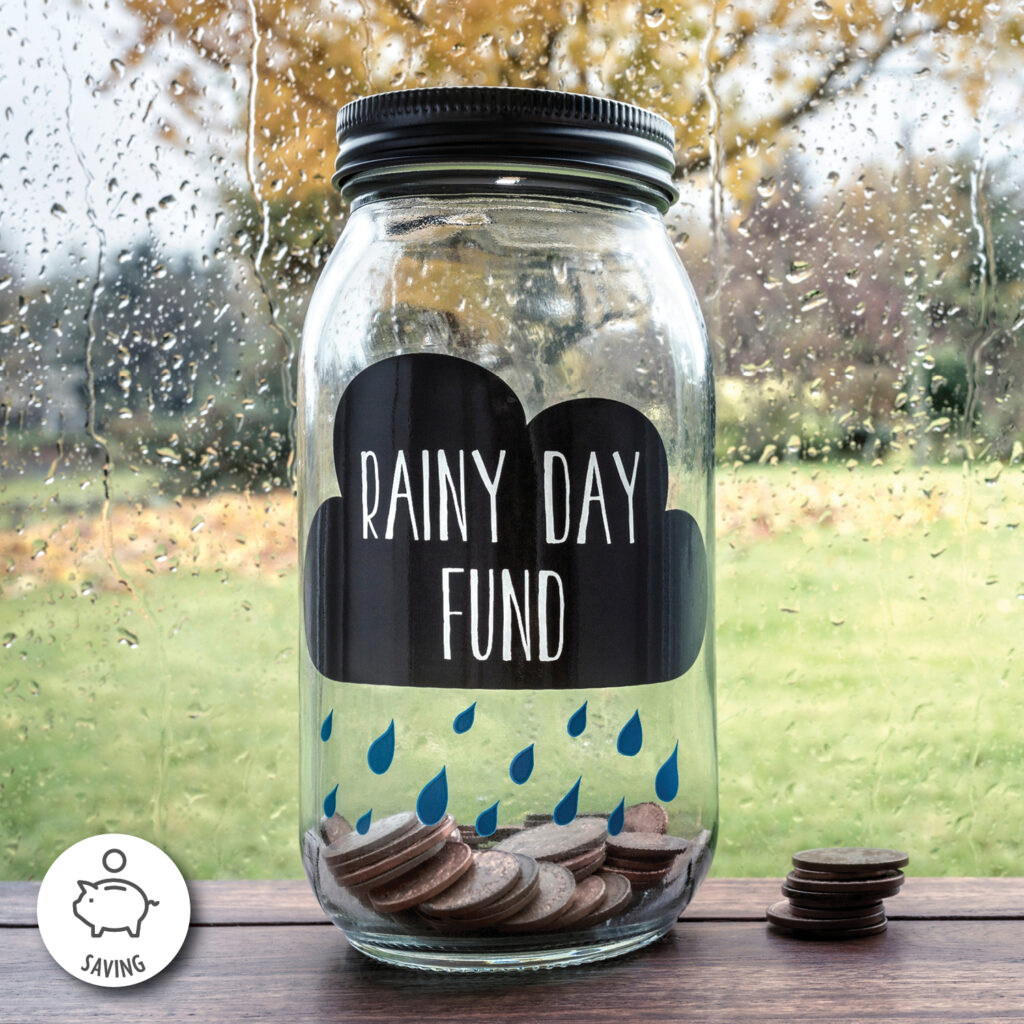
The Importance of Saving for a Rainy Day

Financial Wellness

Life is full of surprises, and some of them can be expensive. Whether it’s a medical emergency, job loss, car repairs, or any other unforeseen event, having a financial safety net can provide a sense of security and stability. Let’s take a look at why it’s so important to save for rainy days.

Stay out of debt

When life throws an expensive surprise your way and you don’t have money to pay for it, you may fall into debt just to get by. On the flip side, if you had a well-padded emergency fund, you’d have the cash you need to fall back on in case of an emergency.

Be prepared for sudden unemployment

When you live paycheck to paycheck, your job is your financial lifeline. But no job is guaranteed to last forever. Your workplace may decide to downsize, close its doors or even replace you with a bot. Or, you may find yourself unable to work due to personal circumstances. Having an emergency fund when you’re gainfully employed can help you stay afloat should you suddenly find your lifeline is reduced or cut out.

Flexibility and freedom

Saving for a rainy day brings flexibility and freedom to your life. It enables you to pursue new opportunities, take risks and make significant life changes without the constant fear of financial instability. Whether it’s starting a business, furthering your education, or taking a sabbatical, savings provide the support you need to confidently explore these possibilities.

Peace of mind

Financial stress can take a toll on your physical and mental well-being. Constantly worrying about money can lead to anxiety, depression, strained relationships, and more. Knowing you have an emergency fund prepared and ready for a rainy day can offer a sense of security and peace of mind.

Achieve long-term financial goals

Saving for a rainy day is not just about preparing for emergencies; it’s also a stepping stone toward achieving long-term financial goals. Whether it’s buying a house, starting a family or planning for retirement, having savings will help you stay on track.

Avoid economic downturns related to market fluctuations

The economy is subject to fluctuations, and financial markets can be volatile. During economic downturns or recessions, people will often face reduced job opportunities, pay cuts or decreased business revenue. However, an emergency fund can make a challenging economic climate easier to navigate. People who’ve saved up money for emergencies will be less reliant on credit cards and loans during such times, thus lowering their vulnerability to economic uncertainties.

If you don’t have a well-padded emergency fund, start building one today! Most experts recommend having three to six months’ worth of living expenses in your emergency fund. Review your monthly expenses to reach this number, and then make a plan for building up your fund until it’s complete. You may want to prioritize your emergency fund over other investments until it’s set up.

When the sun is shining, it’s hard to believe the rain will come, but no one’s life is all sunshine, all the time. Saving for a rainy day is a crucial part of financial wellness. Start saving today for a more secure and financially fit life.

Financial Article 1

Resources

Scam Alert! Bitcoin Theft.

The FBI is warning of a rise in Bitcoin ransom scams in which scammers use scare tactics and extortion to squeeze money out of victims in the form of Bitcoin payments.

Fraudsters are leveraging increased fear and uncertainty to steal your money and launder it through the complex cryptocurrency ecosystem, the FBI warns.

Unfortunately, the cryptocurrency payment leaves no room for reclaiming the lost funds.

Here’s all you need to know about these scams and how to best protect yourself.

How the scams play out

In some Bitcoin ransom scams, scammers hijack an email address associated with a business website and contact a client of the business. The email informs the victim that a hacker has found a vulnerability in the company’s website and is holding the victim’s data hostage until a Bitcoin payment is made for its release. The victim, fearing monetary loss, may comply with the scammer and make the payment. In reality, though, the scammer has only hacked into the company’s email database. They have no access to the customer’s sensitive information.

While the scammer can hijack any website that has access to sensitive information, financial institutions are especially vulnerable to this scam. We utilize strict protective measures, like encryption and updated security software to protect our members’ information, but fraudsters may still try to scam members by persuading them that their data is at risk of being exposed.

In another variation of the Bitcoin ransom scam, scammers use “sextortion” to take the victims for money. They’ll claim to have evidence of the victim engaging in questionable internet usage and threaten to share this information with the victim’s contacts unless a ransom payment is made immediately. Some criminals have taken this scam a step further during the COVID-19 pandemic. In addition to the threat of releasing the information they supposedly have on the victim, they’ll also promise to infect the victim and their family with the coronavirus unless a payment is sent to a Bitcoin wallet.

Protect yourself 

Fortunately, ransom scams are easy to spot.

If you receive an email allegedly sent from a business you use, and it contains a message like what’s described above, do not respond. You can contact the company yourself to ask if there has been a data breach. You will likely learn there has not been any sort of breach within the company.

Similarly, if you receive an email threatening to expose your internet usage history and/or to infect you or your family with the coronavirus, do not respond. Mark the email as spam and delete it promptly.

If you’ve been scammed

Unfortunately, cryptocurrency transactions pose an extra risk by being absolutely final. There’s no way to cancel a cryptocurrency payment, back out of a purchase or trace the Bitcoin wallet to its owner.

However, if you believe you’ve been targeted by a Bitcoin ransom scam, you can help prevent others from falling victim by reaching out to the appropriate authorities.

If the scammer posed as representatives of, be sure to let us know! We’ll send out a warning to all our members and caution them not to respond to any emails claiming to have hacked our database or to have accessed our members’ sensitive information. If the scammer is posing as a representative of a different company, it’s a good idea to let them know about it, too.

It’s equally important to alert law enforcement agencies about every scam attempt. The FBI’s Criminal Investigative Division has a team that’s dedicated to preventing and fighting cryptocurrency laundering and fraud. If you are the victim of a cryptocurrency scam or you’ve been targeted by one, be sure to contact your local FBI field office or visit the bureau’s Internet Crime Complaint Center .

You can also alert the Federal Trade Commission at FTC.gov.

Many people are struggling financially. Unfortunately, scammers are trying to make difficult times even harder by extorting victims for money. Stay alert and stay safe!

Should I Buy Out My Lease

Should I Buy Out My Lease

Q: I’m thinking of caving to the hype; should I buy out my lease?

A: With cars in hot demand, they’re selling at all-time high prices. That’s why many lease customers are looking at trade-in values for their vehicles and choosing to buy out their lease. Here’s what you need to know about buying out your lease.

What is a lease buyout?

Buying out a lease involves paying the car’s “buyout price” according to the lease contract, which then makes you the car’s new owner. Buying out a lease makes the most sense when you are nearing the end of your term.  

How can I determine my car’s buyout price?

Look for the term “residual value” in your lease contract. This tells you what your car is expected to be worth at the end of the lease term. To determine your vehicle’s actual buyout price, add the residual value to any remaining payments. For example, if your car’s residual value is $25,000 and you owe another 10 payments of $500, the car’s buyout price is $30,000. 

Will I need to pay any fees in addition to the buyout price?

Your vehicle’s buyout price may be subject to an auto sales tax and your lender may charge additional fees on top of that. Take note of your contract details so you’ll know the true total you’ll be paying before deciding to purchase a leased car.

The good news is that you won’t be accountable for typical lease-end fees, which can include the costs of reconditioning the vehicle and an over-mileage penalty.

What are the advantages of buying out a lease?

Many drivers are opting to buy their leased vehicles due to the current state of the auto industry. Supply is low and buying a car that you already lease will give you first dibs at a hot commodity.  

Some drivers are choosing to capitalize on the high demand of used cars by buying out their leases and then flipping the car to a dealership or selling it privately to a new owner. 

Before taking out a loan to buy out a lease, find out what your car is actually worth now. 

How do I buy out my lease?

If you decide to buy out your lease, run the numbers as described above to be sure it’s a financially responsible decision. When you have the total buyout price, your next step is to work on financing. Then, contact the company you lease from to complete the purchase.

Finally, notify your insurance company about the change in ownership of your vehicle and consider changing your coverage to reduce your premium amount. 

If you’re looking to finance an auto loan for a lease buyout car, look to Liberty First! Our auto loans offer low interest rates, easy payback terms, and a quick approval process. Call, click, or stop by to get started or discuss available options!

Top
Liberty First Credit Union
Privacy Overview

This website uses cookies so that we can provide you with the best user experience possible. Cookie information is stored in your browser and performs functions such as recognising you when you return to our website and helping our team to understand which sections of the website you find most interesting and useful.